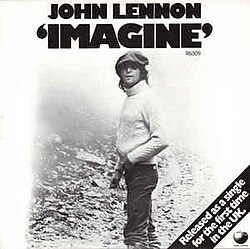
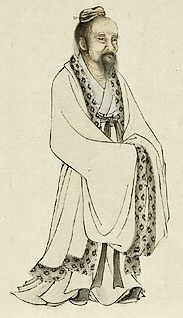
While reading the ancient Chinese thinker Zhuangzi, the lyrics of John Lennon’s Imagine suddenly came to mind. The first verse goes roughly like this: “Imagine there’s no heaven or hell, above us only sky. Imagine all the people living for today.”
This resonates with Zhuangzi’s idea of a world where all things are equal and no boundaries exist.
Noticing such a similarity—or even a kind of convergence—also brings to mind Nowhere Man, released by the Beatles in 1965. The song begins with the line “He’s a real Nowhere Man”, and continues with a series of negative expressions. Yet this negativity is not merely denial; it can be interpreted as an attitude that tries to erase the divisions and distinctions created by a fixed point of view. Here too, one can sense a spirit that corresponds to Zhuangzi’s theory of the Equalization of Things.
Whether John Lennon actually read the Zhuangzi is unknown. However, it is said that he took an interest in Zen thought introduced by figures such as D. T. Suzuki, read spiritual texts such as The Tibetan Book of the Dead, and had been an avid reader of Lewis Carroll’s Alice’s Adventures in Wonderland and Through the Looking-Glass since his youth.
Considering this background, it is reasonable to assume that he was drawn to something different from the Western mode of thinking that attempts to understand the world by dividing things into opposing categories—good and evil, left and right, front and back, above and below, beauty and ugliness.
(1) Imagine

The call in Imagine—“imagine”—does not urge us to perceive reality on the basis of the absolute division between heaven and hell constructed by Western thought. Rather, it invites us to picture a world in which such divisions simply do not exist, encouraging us to step away from reality and “imagine a world that is nowhere.”
Imagine there’s no Heaven
It’s easy if you try
No Hell below us
Above us only sky
Imagine all the people
Living for today…
Let us try to read the first verse of Imagine from a Zhuangzian perspective.
“Above us only sky” suggests a world without the distinction between Heaven and Hell.
If we apply the same line of thinking, what does “today” mean ?
It is a time without separation into yesterday (the past) and tomorrow (the future); it is precisely the “now” in which we are living.
Yet the moment we try to grasp that “now,” it is no longer the present—it has already slipped into the past. In order not to create such distinctions, all we can do is live for today.
In this way, simply living within “the space called sky” and “the time called today,” without drawing any boundaries—that may seem difficult if we try to think it through logically.
And yet, it might actually be surprisingly easy, if you try.
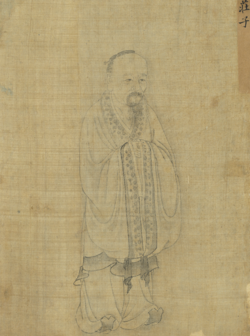
Zhuangzi, too, acknowledges that distinctions certainly exist in the real world.
However, he regards them as differences that arise from human value judgments; beyond those perspectives, everything is ultimately one.
In all things, there is indeed a point at which they become what they are, and a capacity by which they can be what they are. There is nothing that cannot become so, and nothing that lacks the ability to do so.
Therefore, whether we speak of a slender stalk or a great pillar, a stern face or the beauty of Xishi, vastness or vagueness, or even the strange and the unusual—through the Way (Dao), all of them are connected and become one. (…)
Only those who truly grasp the essence of things understand that the principles of all phenomena are ultimately unified. Yet such people do not recklessly impose their knowledge; instead, they allow it to settle naturally into the modest actions of everyday life and bring it to life through practice.
(Zhuangzi, ch. Discussion on Making All Things Equal)
In reality, there are all kinds of value judgments—such as big and small, beautiful and ugly. However, from the perspective of natural being-as-it-is, all of these are nothing more than “one.”
And for those who understand this, the fact that everything is one and without distinctions manifests naturally in the way they live their everyday lives. To borrow the words of John Lennon, all one needs in order to realize this is simply to imagine, and once you try it, it’s easy.
Following the lyrics of Imagine, we come across the phrase: “the world will be as one.” This corresponds precisely to Zhuangzi’s idea of “dào tōng wéi yī”—that is, going beyond every opposition or distinction and returning to one fundamental principle.
With this in mind, the repeated negations in the lyrics—those expressed by no and not—do not mean that the things mentioned (such as countries or religion) should not exist. Rather, the repetition of absence removes the divisions created by those words, turning the condition of being all and only one into a prayer for peace—peace without killing or dying for someone, without greed or hunger.
Imagine
Imagine there’s no Heaven
It’s easy if you try
No Hell below us
Above us only sky
Imagine all the people
Living for today…
Imagine there’s no countries
It isn’t hard to do
Nothing to kill or die for
And no religion too
Imagine all the people
Living life in peace
You may say I’m a dreamer
But I’m not the only one
I hope someday you’ll join us
And the world will be as one
Imagine no possessions
I wonder if you can
No need for greed or hunger
A brotherhood of man
Imagine all the people
Sharing all the world
You may say I’m a dreamer
But I’m not the only one
I hope someday you’ll join us
And the world will live as one
(2) Nowhere Man
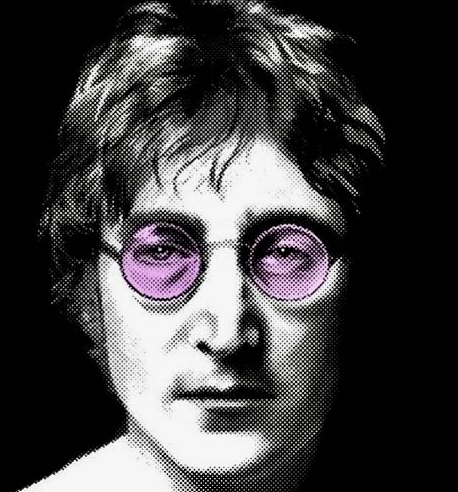
John Lennon once spoke about Nowhere Man in an interview as follows:
I’d spent five hours that morning trying to write a song that was meaningful and good, and I finally gave up and lay down. Then ‘Nowhere Man’ came, words and music, the whole damn thing as I lay down.
(Playboy, September 1980.)
If interpreted through the concept of Mu (無), this suggests that after exhausting all effort and reaching a state of pure nothingness, inspiration suddenly flashes forth, and the work is completed in a single, spontaneous moment.
And resonating with the idea of nothingness, the negative words nowhere, nobody, and not are repeated. However, just as in the case of Imagine, they do not signify the negation of existence itself. Rather, they express the absence of divisions such as here and there, I and you, gain and loss.
This state corresponds precisely to what Zhuangzi calls “the Village of Nowhere” or “Nowhere Land.” Therefore, in Zhuangzian terms, a nowhere man would mean a person who dwells in the Village of Nowhere.
He’s a real nowhere man
Sitting in his nowhere land
Making all his nowhere plans for nobody
Doesn’t have a point of view
Knows not where he’s going to
Isn’t he a bit like you and me ?
John Lennon’s a nowhere man is literally “a person of the Village of Nowhere,” sitting in nowhere land and making plans for nowhere—plans that are for nobody.
If he had a single point of view, the direction of where he is walking would be clear. But lacking such a perspective, he cannot tell where he intends to go.
Ordinarily, this state might seem like confusion: losing one’s purpose, wandering lost over an endless stretch of land. In such moments, one might even feel that they are a meaningless, useless existence.
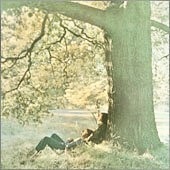
However, Zhuangzi teaches that it is precisely this uselessness that frees a person. For example, in the final anecdote of the chapter “Free and Easy Wandering’, someone asks what to do with a large tree that is of no practical use. Zhuangzi’s answer introduces the concept of the Village of Nowhere.
Now, you have a large tree and worry that it is of no use. But why not plant it in the Village of Nowhere, in a wide and boundless plain ? There, you could wander aimlessly, stroll freely without purpose, and spend your time lying or resting beneath the tree. In that way, it will never be cut down by an axe, nor harmed by anything. It will not be said that it has no use. Why, then, should you trouble yourself with worry ?
(Zhuangzi, ch. Free and Easy Wandering)
When there is something, that thing is first distinguished from others and is expected to fulfill a limited role or purpose. In other words, purpose and utility are taken as a given.
On the other hand, “Nowhere” refers to a state in which all such restrictions or conditions are absent. There is no binding to exist for something, and one is liberated from all limitations.
In such a world, one is not constrained by artificial distinctions or purposes; simply wandering freely becomes itself natural, a state of being as it is.
When John Lennon grew exhausted trying to write a good song and lay down in surrender, he may have entered in the Village of Nowhere, truly becoming a real nowhere man. That is why he could say, “Take your time, don’t hurry”—which, in a sense, is akin to wandering at leisure.
At first glance, idly wandering in “doing nothing” might seem to waste time without accomplishing anything useful. Thus, a nowhere man may not even realize what he is losing (“You don’t know what you’re missing”). And he only sees what he wants to see (“Just sees what he wants to see”) because, as far as he can, he chooses not to see (“He’s as blind as he can be”).
From an ordinary perspective, this may appear narrow-minded or undesirable. Yet, because a nowhere man is not bound by a single viewpoint or efficiency, even if something is lost, the world remains at his command (“The world is at your command”), and someday somebody else may lend a hand (“somebody else lends you a hand”).
After all, he might be like you and me—or perhaps he can see a little of me. That is why one might call out to him, “Can you see me at all?”
Here, the boundaries between I, you, and he blur. John Lennon himself becomes a nowhere man, and those of us listening to his music may each become a nowhere man as well. In this sense, we can say he is nobody, and yet everybody.
Nowhere man
He’s a real nowhere man
Sitting in his nowhere land
Making all his nowhere plans for nobody
Doesn’t have a point of view
Knows not where he’s going to
Isn’t he a bit like you and me ?
Nowhere Man, please listen
You don’t know what you’re missing
Nowhere Man, the world is at your command
He’s as blind as he can be
Just sees what he wants to see
Nowhere Man can you see me at all ?
Nowhere Man, don’t worry
Take your time, don’t hurry
Leave it all till somebody else lends you a hand
Doesn’t have a point of view
Knows not where he’s going to
Isn’t he a bit like you and me?
Nowhere Man, please listen
You don’t know what you’re missing
Nowhere Man, the world is at your command
He’s a real Nowhere Man
Sitting in his nowhere land
Making all his nowhere plans for nobody
Making all his nowhere plans for nobody
Making all his nowhere plans for nobody

As noted earlier, there is no clear evidence that John Lennon actually read Zhuangzi, and it is unclear how much he knew about Zhuangzi’s thought. However, even by tracing the lyrics of Imagine and Nowhere Man, it becomes apparent that Lennon dreamed of a world very much like that envisioned by Zhuangzi. In this world, negation does not signify the denial of existence itself; rather, it signifies the removal of the various divisions and distinctions that humans have unknowingly created.
Regarding such divisions, Zhuangzi speaks as follows:
All things, from one perspective, are “that”, and from another perspective, are “this.” If you take “that” as the standard, you cannot see yourself; if you know yourself, you can know “that.” (…excerpt…)
“That” and “this” are interconnected, and each contains its own judgments of right and wrong. Both that and this possess their own forms of correctness and incorrectness. So, is “that” truly correct? Or is it incorrect? Neither has a perfectly corresponding counterpart; it is precisely this incompleteness that constitutes the pivot of the Tao (道枢, dousū—the center of the Tao).
This pivot sits at the center of the cycle of all things. By attaining the center, the pivot can respond to infinite changes and events. In other words, the Tao is not perfect alignment or absolute certainty, but a center that embraces difference and incompleteness—a foundation upon which all things can freely transform.
(Zhuangzi, ch. Discussion on Making All Things Equal)
The distinction between “that” and “this” depends on the position of “I”. When “I” move, “that” becomes “this”, and “this” becomes “that.”
Even if “this” is correct, a change in perspective can make “that” correct instead. From this view, both are correct and both are incorrect. It is precisely the center that embraces all such differences and incompleteness that constitutes the pivot of the Tao.
There, everything is relative, and both that and this have their own right and wrong. No absolute answer exists. Nothing corresponds perfectly; it is the gaps and differences that form the pivot of the Tao, in which all things circulate infinitely and exist amid endless change.
One might even say that this pivot of the Tao serves as the underlying principle that shapes the Village of Nowhere.
John Lennon intuited such a realm of unrestricted freedom as “the world will be as one,” and he called out to each of us: “I hope someday you’ll join us” and “Imagine.”
The dream John Lennon murmurs—“I’m a dreamer”—within Imagine echoes the ancient dream of Zhuangzi, bearing us gently toward the Village of Nowhere, where all boundaries fade like morning mist.
To dream such a dream — is this not a beautiful thing ?
And finally, let us remember Zhuangzi’s well-known tale, “The Butterfly Dream”.
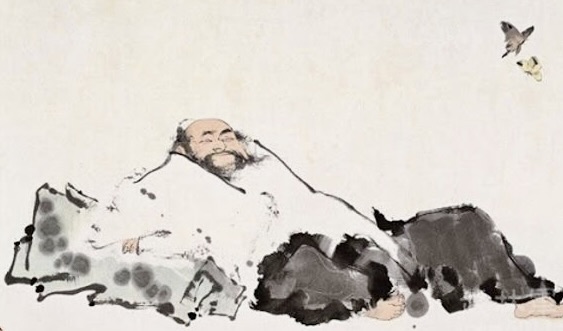
Long ago, Zhuangzi dreamed he had become a butterfly. He fluttered lightly through the air, delighting in the freedom of his own heart, knowing nothing of Zhuangzi.
Then, suddenly, he awoke—and there indeed was Zhuangzi. Yet he could not tell whether it was Zhuangzi who had dreamed he was a butterfly, or a butterfly dreaming that it was Zhuangzi.
Surely, there must be a distinction between Zhuangzi and the butterfly.
This is what is called the transformation of things (物化).
(Zhuangzi, ch. Discussion on Making All Things Equal)
 LA BOHEME GALANTE ボエム・ギャラント