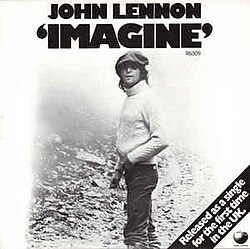
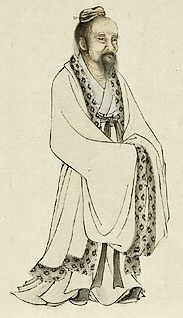
While reading the ancient Chinese thinker Zhuangzi, the lyrics of John Lennon’s Imagine suddenly came to mind. The first verse goes roughly like this: “Imagine there’s no heaven or hell, above us only sky. Imagine all the people living for today.”
This resonates with Zhuangzi’s idea of a world where all things are equal and no boundaries exist.
Noticing such a similarity—or even a kind of convergence—also brings to mind Nowhere Man, released by the Beatles in 1965. The song begins with the line “He’s a real Nowhere Man”, and continues with a series of negative expressions. Yet this negativity is not merely denial; it can be interpreted as an attitude that tries to erase the divisions and distinctions created by a fixed point of view. Here too, one can sense a spirit that corresponds to Zhuangzi’s theory of the Equalization of Things.
Whether John Lennon actually read the Zhuangzi is unknown. However, it is said that he took an interest in Zen thought introduced by figures such as D. T. Suzuki, read spiritual texts such as The Tibetan Book of the Dead, and had been an avid reader of Lewis Carroll’s Alice’s Adventures in Wonderland and Through the Looking-Glass since his youth.
Considering this background, it is reasonable to assume that he was drawn to something different from the Western mode of thinking that attempts to understand the world by dividing things into opposing categories—good and evil, left and right, front and back, above and below, beauty and ugliness.
 LA BOHEME GALANTE ボエム・ギャラント