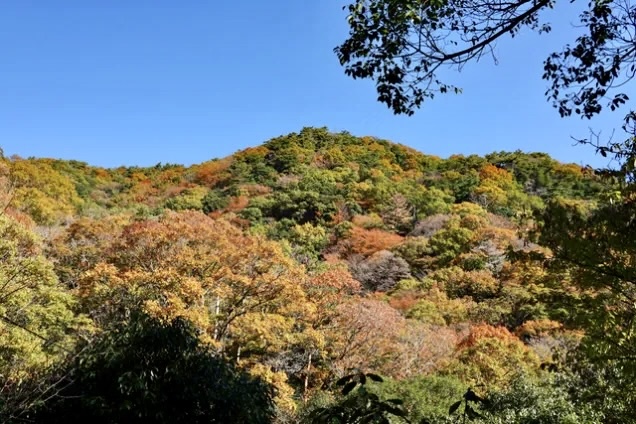
Mount Maya stands quietly on the northern side of Kobe. While it welcomes many visitors today as a popular tourist destination, tracing its history reveals a sacred realm of quiet gravity—one that conveys the enduring essence of ancient Japanese spiritual devotion to the present day.
When following the flow of time from the past to the modern era, the various sites scattered throughout the mountain emerge not merely as scenic viewpoints, but as traces harboring memories of ancient faith. These vestiges seem to silently narrate how people of old understood the world in harmony with local spirits and Buddhist deities.
By shifting our perspective from ancient mountain worship to Shugendo, and further to the concepts of the Womb Realm Mandala (Taizokai Mandala) in Esoteric Buddhism, the layers of meaning bestowed upon Mount Maya over the ages gradually come to light. Following this process deepens our understanding of the background behind why this mountain has long been embraced as the “Mother Mountain.”
(1) Ancient Mountain Worship
Mount Maya, which forms a part of the Rokko Mountain Range, sits in close proximity to Osaka Bay. Due to its steep slopes and short river valleys, rainfall rushes down directly into the sea. The terrain is also highly prone to the formation of clouds and mist. For ancient people, the mountain may have been perceived as a symbol of the great water cycle—a place where “water descends from the heavens, is captured by the mountain, and is returned once more to the sea.”
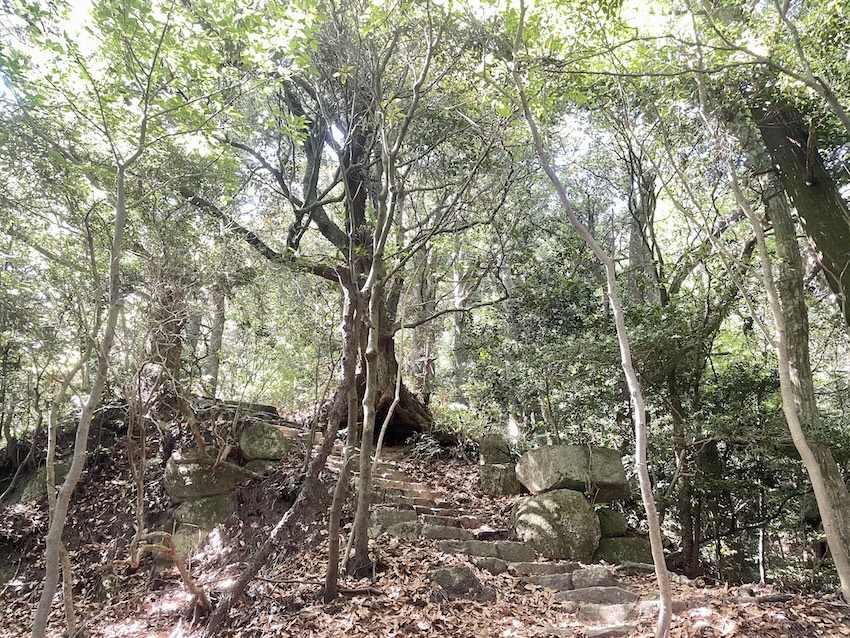
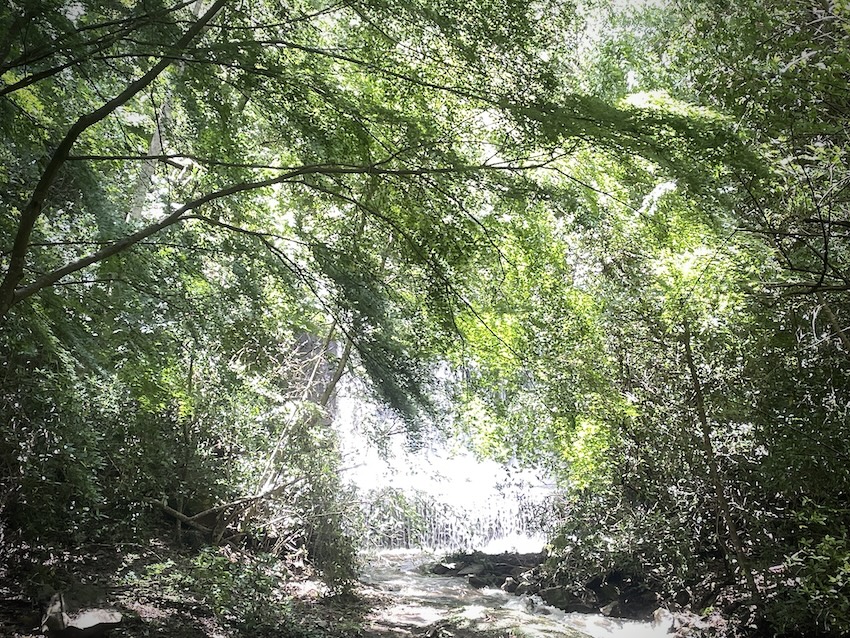
While worshipping mountains as sacred objects is a practice found in many regions, mountains like Mount Maya that harbor water sources were particularly tied to Mikumari no Kami (the deity of water distribution), and were recognized as spiritual realms that gave birth to the waters of life.
Furthermore, a mountain as a source of water was simultaneously deep-seated in views of life and death. In folk beliefs across Japan, there is a widespread concept that when a person dies, their soul returns to the mountain, becoming an ancestral spirit that watches over their descendants. In this way, the mountain possessed a dual character: it was the source of life, and at the same time, the otherworldly realm to which the dead returned.
This duality also overlapped with the very nature of the deities (kami). Deities were not always beings that granted protection to humans; at times, they manifested as Araburu Kami (raging or malevolent deities) who brought about disaster and pestilence. For this reason, people performed rituals (matsuri) to appease the deities and properly channel their power.
A matsuri is an act of inviting the deity, offering gifts, and harmonizing their power. In doing so, natural objects such as giant rocks, waterfalls, and monumental trees were frequently chosen as yorishiro (temporary dwellings or conduits for the divine spirit). It was also not uncommon for the mountain itself to be revered as the goshintai (the physical body of the deity).
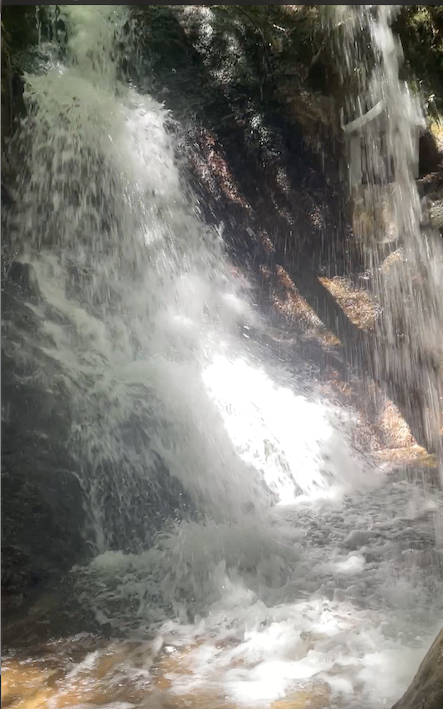
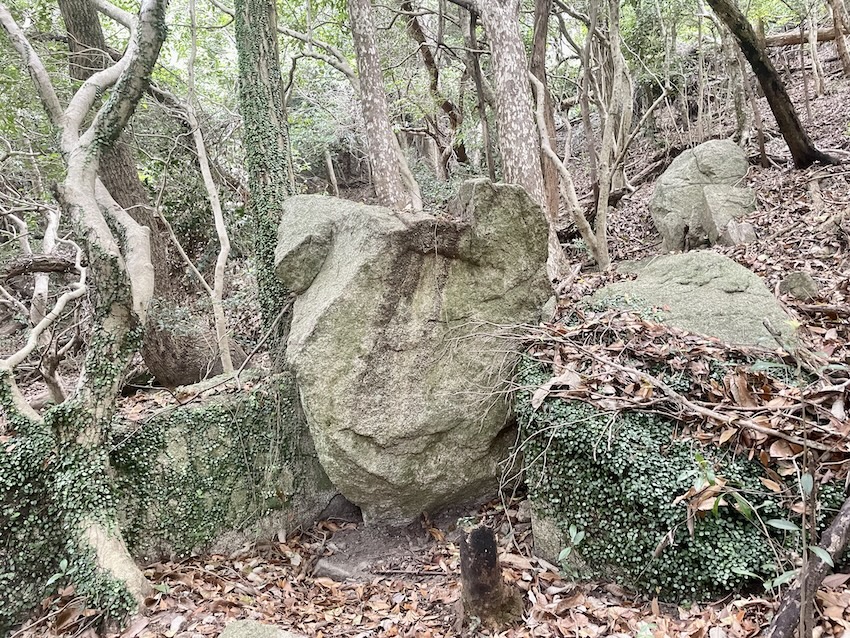
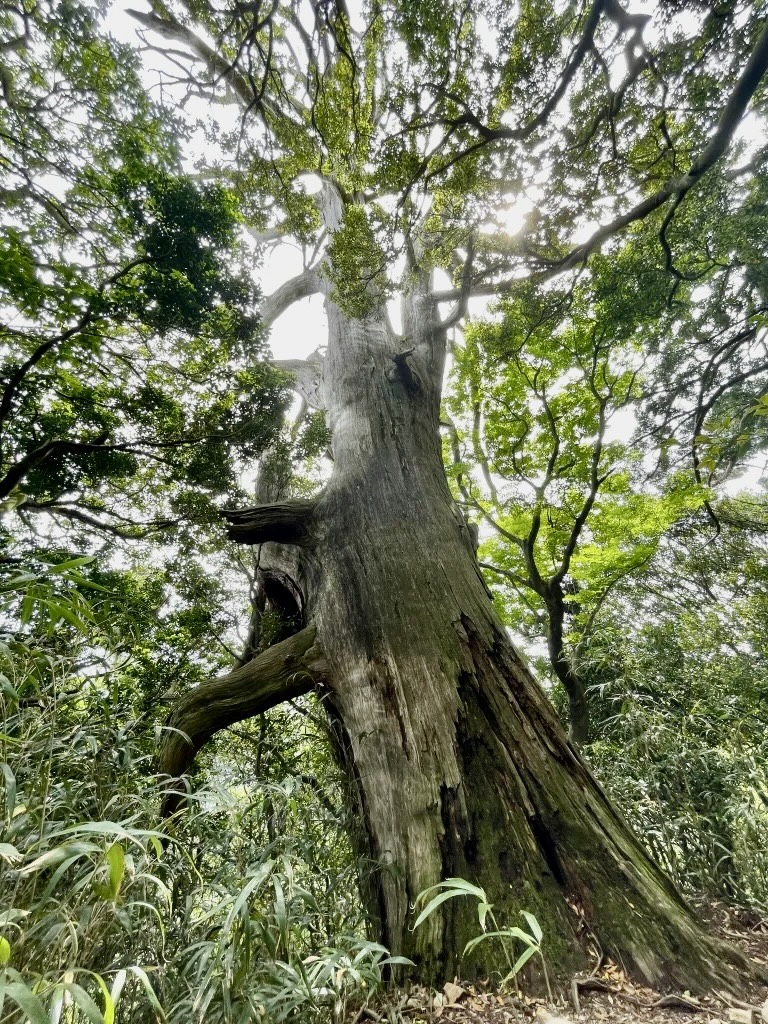
Waterfalls were sites where people discerned the dynamism of life force in the rushing torrents. Giant rocks, through their immobility, symbolized eternity. Monumental trees, existing through vast stretches of time, embodied a transcendent vital energy. It is believed that the overwhelming presence of these natural objects formed the background for why they were understood as vessels for the divine.
Consequently, while the mountain was a sanctuary where divine spirits descended, it was also a space of awe and dread into which humans could not easily venture. Except for special occasions such as rituals, entering the mountain without cause was likely avoided.
Mount Maya, too, is a mountain that cradles the headwaters of the Ikuta River, which flows along its foothills. Its steep terrain causes water to plummet violently between massive boulders, nurturing deep valleys and lush vegetation. This natural environment itself served as the foundation that made people conscious of the mountain as something sacred, shaping the spiritual image of Mount Maya.
(2) A Mountain of ” Shugendo”
The arrival of Buddhism from the Asian continent in the sixth century brought about a major transformation in the religious worldview of the Japanese people. The mountains, which had previously been revered as sacred abodes where deities resided in tranquility, began to be viewed through the lens of Buddhism as places to seek enlightenment and spiritual power through rigorous ascetic training.
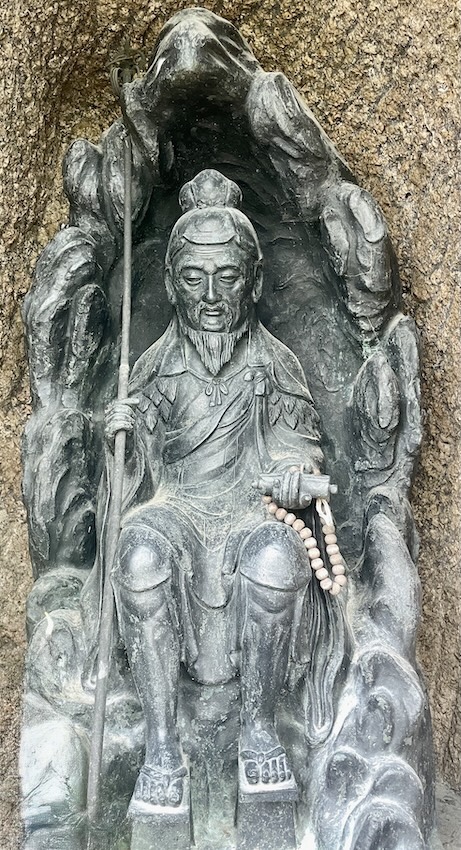
For ancient people, mountains were special realms inhabited by deities and ancestral spirits. Yet, they did not avoid the mountains entirely; they maintained a constant relationship with them through rituals, hunting, and foraging. Buddhism layered itself upon this preexisting mountain worship, eventually giving rise to mountain Buddhism, characterized by severe ascetic practices undertaken deep within the peaks.
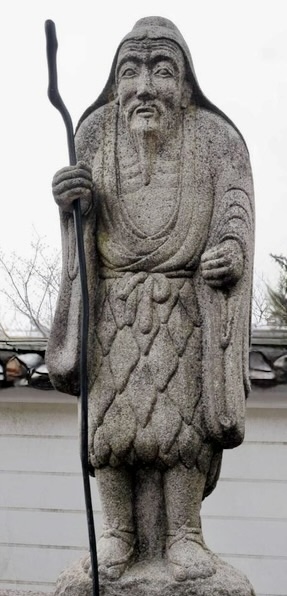
The figure central to this narrative is En no Ozunu (commonly known as En no Gyoja). In later generations, he came to be revered as the founder of Shugendo, embodying Japan’s distinct tradition of mountain asceticism.
An intriguing question arises here: how could a mountain, originally a sacred place reserved for the deities, become a setting for human training? To modern Japanese people, indigenous deities (kami) and Buddhist deities (hotoke) appear to coexist in comparative harmony. However, the two were not aligned from the moment Buddhism arrived. Rather, the relationship between the newly introduced Buddhism and the ancient local deities was forged over a vast span of time.
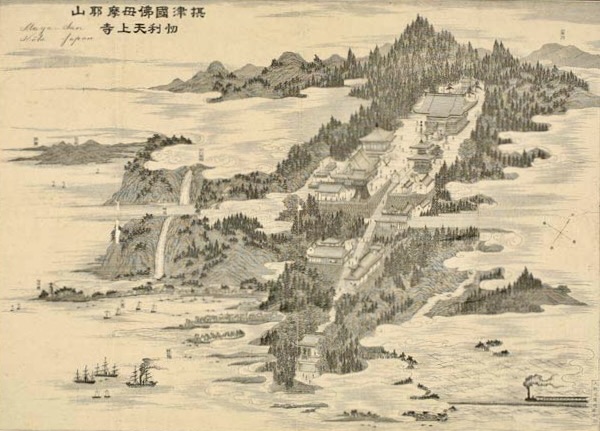
Near the summit of Mount Maya sits Tenjo-ji Temple. According to legend, it was founded in 646 (the second year of the Taika era) by the high-ranking Indian monk Hodo Sennin, and its primary object of worship is the Eleven-Headed Kannon. This founding narrative can also be interpreted as a lore that chronicles the process by which Mount Maya—originally a mountain of local deities—became intertwined with Buddhism.
From the perspective of Shugendo, let us briefly reflect on how Buddhism built its relationship with Japan’s ancient deities.
Shinshin Ridatsu (Severing Ties with the Divine Body) and Horaku(Entertaining the Deities with the Dharma)
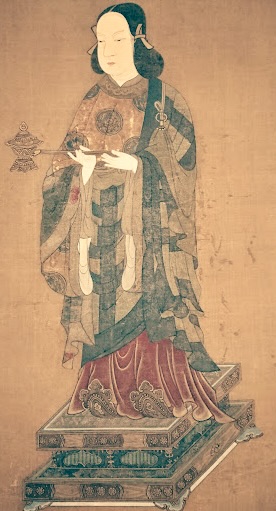
It is well known that during the process of accepting Buddhism, a fierce conflict arose between pro-Buddhist and anti-Buddhist factions. In the initial stages, however, the imported Buddhist deities were perceived by the Japanese people as entities possessing a kind of spiritual authority, and were not understood as being fundamentally different from their ancient indigenous deities.
A major turning point arrived in the late seventh century. As the formation of the Ritsuryo state (a centralized state based on legal codes) progressed and Buddhism became positioned as a crucial ideology supporting the nation, a new interpretation of the relationship between kami and Buddhas emerged. Buddhism teaches that all living beings undergo transmigration through the Six Realms of Reincarnation (Rokudo: Hell, Hungry Ghosts, Animals, Asuras [demigods], Humans, and Devas [heavenly beings]). Within this worldview, the Japanese kami were often understood as entities residing in the heavenly realm, the highest tier of the Six Realms.
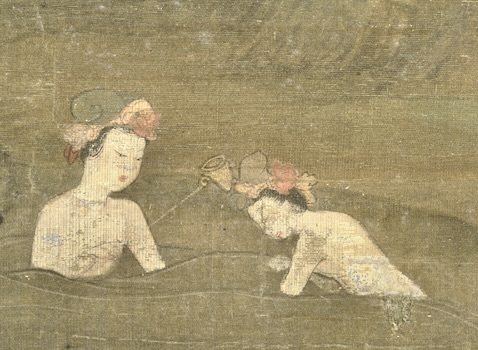
Crucially, however, this also meant that the kami themselves belonged to the cycle of reincarnation and, ultimately, required salvation through the teachings of the Buddha.
This gave rise to the concept of Shinshin Ridatsu (literally, “severing ties with the divine body”). This concept—the idea that the deities themselves wished to shed their divine forms, take refuge in the Buddhist Dharma, and attain Buddhood—is known as a highly unique development in the history of Japan’s syncretic religious evolution.
This concept evolved further into the idea of Horaku (sharing the joy of the Dharma). While Horaku primarily refers to the act of offering merit to the kami through sutra chanting and Buddhist rituals, its practice also encompassed constructing Buddhist temples within the sacred precincts of local deities or enshrining Buddhist statues there. Behind this lay the mindset that since the kami were also seekers of salvation, humans could aid them by practicing the Buddhist Dharma and dedicating the resulting merit to the deities (Eko / transfer of merit). (Satoshi Ito, What is Shinto?, Chuko Shinsho).
For example, many founding legends (engi) of Jinguji (shrine-temples) contain tales of a kami appearing in a dream to request the construction of a temple. In one such tale, a deity pleads with a human, saying, “Because of the karma from my past lives, I remain confined to this divine body. I wish to take refuge in the Buddhist Dharma, but I have no opportunity to do so. Please, build a temple and save me.”
These traditions vividly demonstrate that the indigenous deities were understood as beings who, like humans, sought salvation through the Buddha.
Shugendo (Mountain Asceticism)
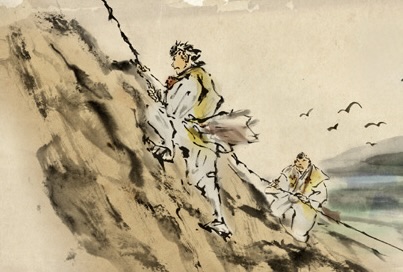
Against the backdrop of this evolving relationship between ancient traditions and Buddhism, traditional mountain worship and Buddhist ascetic practices merged, paving the way for the development of Japan’s unique tradition of Shugendo.
Originally, mountains were revered as sacred sanctuaries where the deities resided. Concurrently, Buddhism possessed a long-standing tradition of venturing deep into rugged mountains to seek enlightenment and spiritual power through rigorous discipline. While these two traditions originally held distinct characters, as the idea spread that “the kami also seek salvation through the Buddhist Dharma,” the training undertaken in the mountains came to be connected not only to the practitioner’s own liberation, but also to the memorialization and salvation of the deities dwelling in those lands.
In this way, the acts of entering the mountains, amassing spiritual merit through training, and building halls to offer prayers evolved into a practice that embraced both faith in the local deities and Buddhist cultivation.
En no Ozunu has been passed down through generations as the quintessential symbol of this synthesis. The numerous legends surrounding him—such as commanding demon-spirits (kishin) and freely wielding sorcery—vividly illustrate the awe and reverence that people held for mountain ascetics.
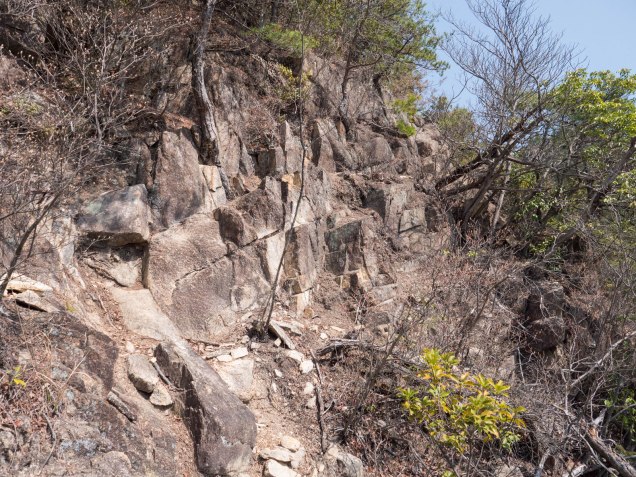
Armed with this historical-religious context, it becomes easier to understand the legend of Hodo Sennin founding Tenjo-ji Temple at the summit of Mount Maya, a peak blessed with deep forests and steep rocky crags that cradle the headwaters of the Ikuta River.
Buddhist concepts of practice and salvation were layered upon ancient mountain worship, imparting a new significance to this mountain as a training ground for ascetics.
Even today, place names such as “Gyoja One” (Ascetic’s Ridge) and “Gyoja-do” (Ascetic’s Hall) endure across the mountain, conveying this ancient tradition to the present era.
Furthermore, near the summit stands a colossal rock known as “Tengu Iwa” (Tengu Rock), where stone monuments dedicated to “Tengu Iwa Okami” and “Ishimaru Sarutahiko Okami” are erected.
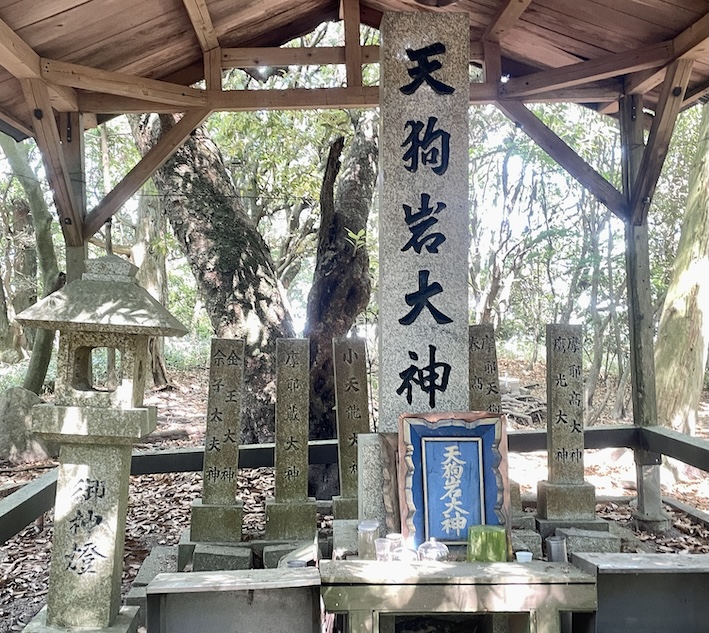
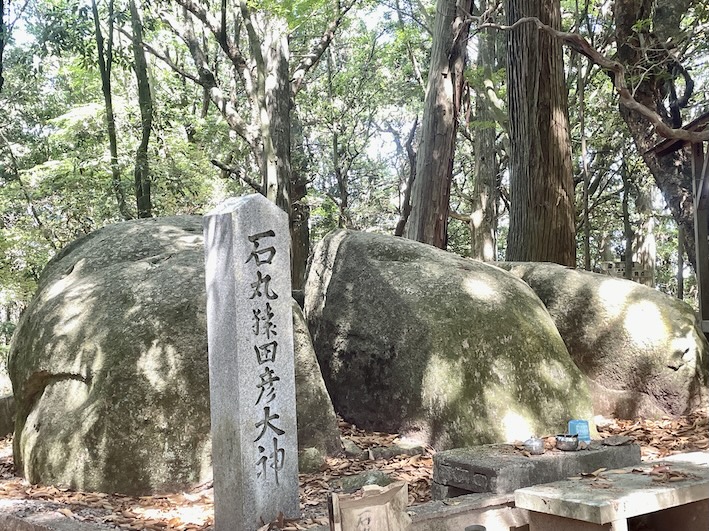
This site carries a legend that an ascetic monk sealed away a tengu (a mythical winged creature) that haunted the mountain, suggesting that Shugendo practitioners were perceived as beings capable of confronting the raw, spiritual power of the peaks.
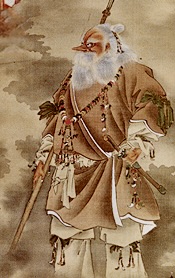
Moreover, Sarutahiko is a deity featured in the Tenson Korin (Descent of the Heavenly Grandson) narrative of Japanese mythology, said to have illuminated the path from Takamagahara (the High Plain of Heaven) to Ashihara no Nakatsukuni(the Central Land of Reed Plains) to guide Ninigi on his descent from the heavens. He is described as having a long nose and a body that glowed crimson, features that in later generations caused him to be associated with the image of a tengu. Today, he is widely worshipped as a deity who opens roads and guides people in the right direction.
These vestiges of devotion, which can still be witnessed today, can be seen as physical historical markers that transmit a spiritual lineage formed through the overlapping of ancient mountain worship and Shugendo.
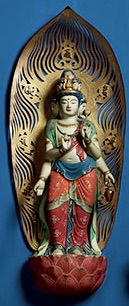
Another intriguing element is the primary object of worship at Tenjo-ji Temple: the Eleven-Headed Kannon (Juichimen Kannon), which is said to have been brought by Hodo Sennin.
Inherently, Bodhisattvas possess no gender. However, the Eleven-Headed Kannon has long been revered as a deity who looks out in all directions with eleven faces to find and rescue people from their suffering. This deeply compassionate form has historically been associated with maternal imagery.
This devotion to the Eleven-Headed Kannon resonates profoundly with the mountain’s image as a nurturer of life and a source of surging waters. Consequently, this alignment may have served as one of the foundational elements that led people to embrace Mount Maya as the “Mother Mountain.” It is precisely because this spiritual soil existed that, in later generations, the legend arose that Kukai enshrined a statue of Maya Fujin (Lady Maya) here, firmly intertwining devotion to the birth mother of Shakyamuni Buddha with this very mountain.
(3) Lady Maya and the Taizokai (Womb Realm)
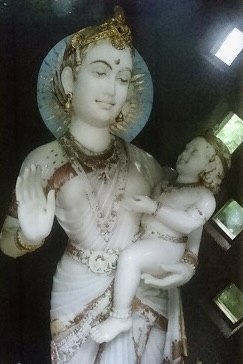
Regarding the origins of Tenjo-ji Temple, two traditions coexist: one attributes its founding to Hodo Sennin in the seventh century, while another claims that Kobo Daishi (Kukai) enshrined a statue of Lady Maya (Maya Fujin) here upon his return from Tang Dynasty China in the ninth century.
However, no contemporary historical documents directly corroborating these accounts have been confirmed, necessitating a cautious approach toward them as historical facts. Rather, it is more plausible to understand these as foundational narratives (engi) constructed in later periods to explain the temple’s lineage and sacred authority.
Nevertheless, what remains profoundly significant is that the enduring transmission of these traditions itself demonstrates that Mount Maya was endowed with a special religious meaning from an early stage.
Generally, in mountain asceticism, practicing within the rugged terrain signified a temporary “death” to the secular world for the practitioner. Conversely, descending the mountain after undergoing grueling training represented a “rebirth,” where one was granted new life. In the fields of folklore and religious studies, it is often pointed out that an essential aspect of mountain asceticism was the practice of treating the deep mountain enveloped in primeval forest as “the mother’s womb,” aiming for the purification of the soul through rituals of death and rebirth (pseudo-death and resurrection). Esoteric Buddhist thought organized this physical experience of the mountains into a more systematic cosmology.
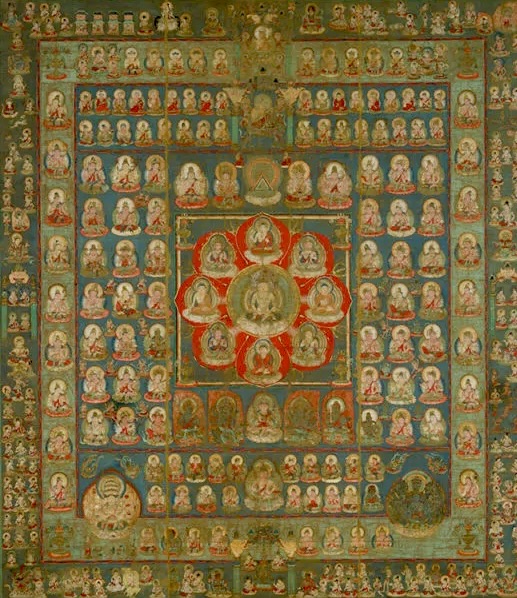
In Esoteric Buddhism, the phenomenal world itself is perceived as the manifestation of Mahavairocana Buddha (Dainichi Nyorai), and this cosmic structure is expressed through two perspectives: the Taizokai (Womb Realm) and the Kongokai(Diamond Realm). The Womb Realm symbolizes the function of enveloping and nurturing all creation, and is frequently likened to a maternal womb. Within this framework, the world is depicted as a “space of generation and receptivity.”
On the other hand, the Diamond Realm symbolizes clarity of wisdom and truth. As the word “diamond” implies, it is characterized by indestructible firmness and a sharp capacity for discernment; here, the world is understood in terms of “order and structure.” These two realms are not opposing concepts, but rather the same universe perceived from different angles. Esoteric Buddhism visualized this dual structure as the Mandala of the Two Realms (Ryokai Mandala), seeking to capture the entirety of the universe as a singular, unified system.
This Esoteric Buddhist worldview eventually became intertwined with the interpretation of mountain spaces in later generations. For instance, in the fields of religious history and folklore, explanations are sometimes offered that view Yoshino as a Diamond Realm space and Kumano as a Womb Realm space. However, historical documents directly showing that these correspondences were explicitly systematized and shared by medieval practitioners are limited. Therefore, it is more appropriate to position such understandings as symbolic readings from later eras rather than as descriptions of the actual practices of the time.
The crucial point is that the mountain spaces inherently possessed a religious significance robust enough to accommodate such interpretations.
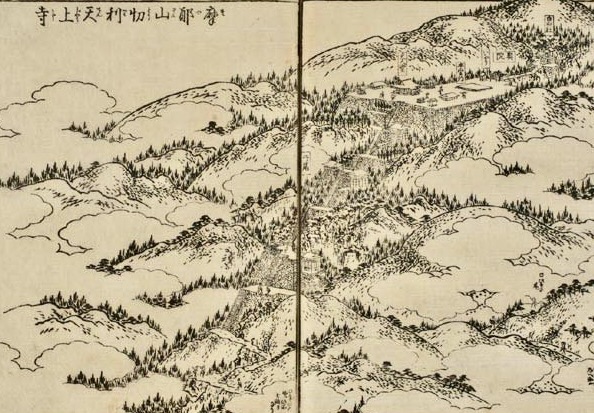
While it is textually difficult to confirm whether such an Esoteric Buddhist mapping was actively applied to Mount Maya, the fact that the two traditional strands—Hodo Sennin and Kukai—are told in layers within Tenjo-ji’s founding narrative can be understood not as a mere record of historical facts, but as an illustration of the process by which ancient traditions and the Buddhist worldview became multi-layered and intertwined over a vast span of time.
Within this religious stratification, devotion to the Eleven-Headed Kannon and Lady Maya speaks to how Mount Maya has been embraced by the people at the foot of the mountain as a sanctuary bearing images of salvation and protection. Consequently, spoken symbolically, Mount Maya is a space that can be perceived as a three-dimensional Taizokai Mandala (Womb Realm Mandala).
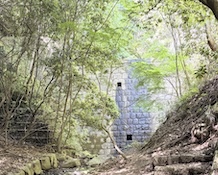
Today, along the Ueno and Aotani paths on the mid-slopes of Mount Maya, a check dam known as the “Kannon-ji Entei” stands. Its name indicates that a temple or a hall dedicated to Kannon once existed in this area. In the Buddhist world, the Bodhisattva Kannon is frequently intertwined with the imagery of water, understood as an embodiment of compassion and purification. Therefore, the fact that devotion to Kannon achieved a certain widespread presence in this mountainous region can be understood through its intrinsic connection to water-related beliefs.
Most notably, the primary object of worship at Tenjo-ji Temple at the summit is the Eleven-Headed Kannon (Juichimen Kannon). A long-standing connection has been noted between the Eleven-Headed Kannon, mountain worship, and sacred sites near water, with the deity’s compassion interpreted as reaching out in every possible direction. The various faces arranged atop the deity’s head symbolize the capacity to rescue sentient beings in diverse ways, and this image of universal salvation is sometimes understood as overlapping with the nature of water, which nourishes and sustains all creation.
Furthermore, on Mount Maya, this is layered with devotion to Lady Maya (Maya Fujin), the birth mother of Shakyamuni Buddha. Lady Maya is understood as a maternal figure central to the birth of the Buddha; her receptivity and image as a nurturer of life resonate profoundly with the compassionate nature found in Kannon worship. Thus, rather than viewing devotion to Kannon (the Eleven-Headed Kannon) and devotion to Lady Maya as having a direct, historical continuity, it is more plausible to consider that they later came to be understood in layers within a single mountain religious space, mediated by their shared symbolic character as “maternal entities that envelop suffering and grant salvation.”
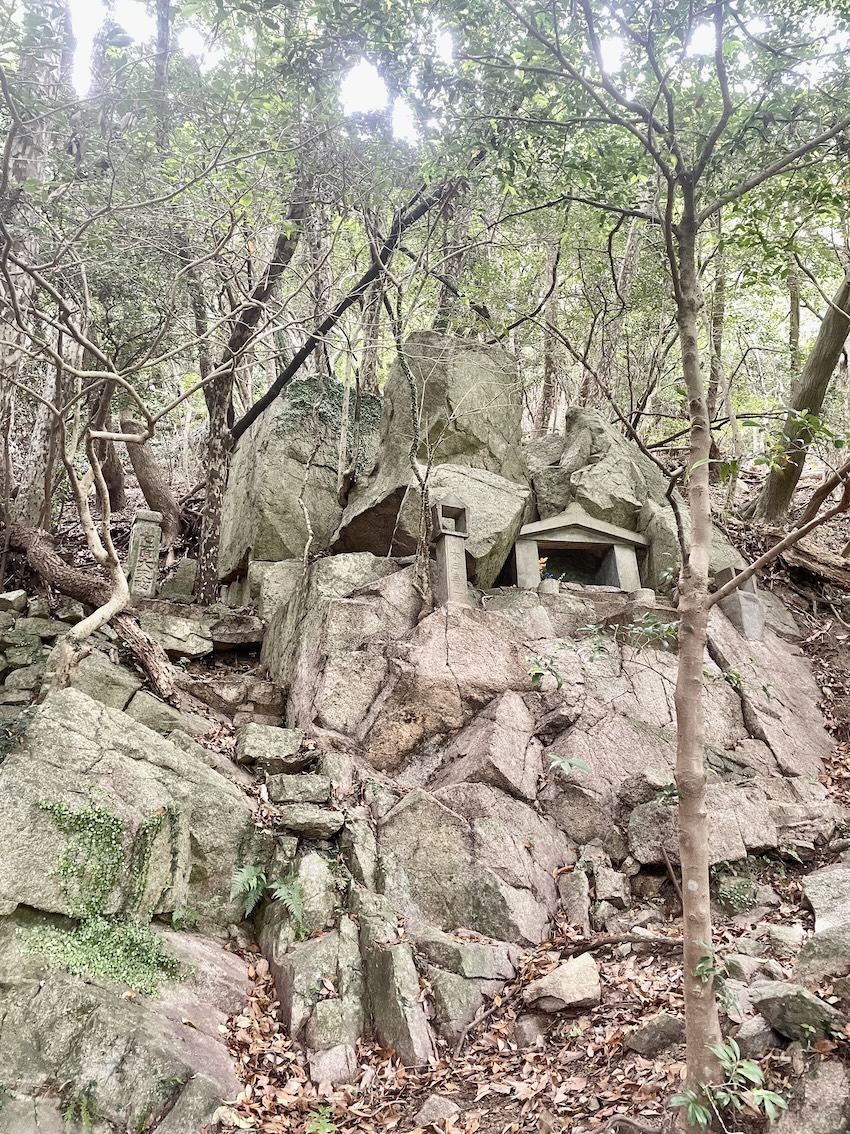
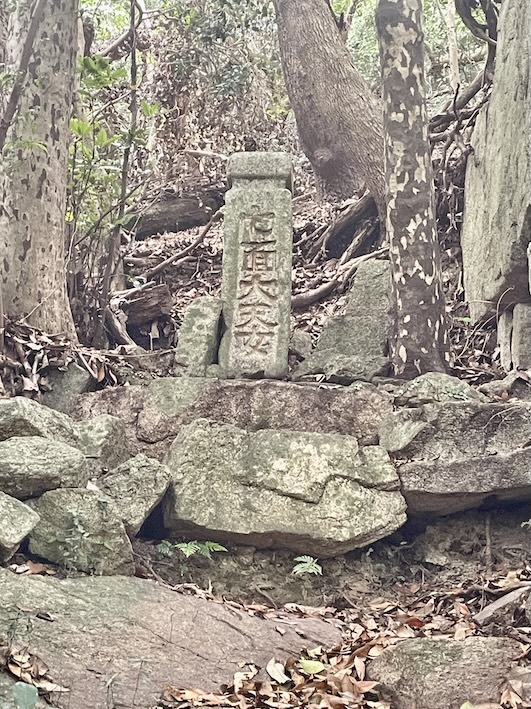
Along the Ueda path on the mid-slopes of Mount Maya—a route connecting the Aotani and Former Maya paths—a stone monument and a small shrine dedicated to Shichimen Dai-Tennyo (the Great Heavenly Maiden of Shichimen) are quietly enshrined. Shichimen Tennyo is a guardian deity deeply revered in the Nichiren sect of Buddhism. Regarding her origins, a narrative is passed down that while Nichiren was preaching the Lotus Sutra atop a giant rock, a dragon manifested in the form of a beautiful woman and vowed, “I shall protect those who practice and spread the Lotus Sutra until the end of generations, removing their suffering and granting them peace.”
This combination of colossal rocks, dragon deities (Ryujin), and female divinities comprises symbolic elements frequently encountered in mountain worship. The shrine of Shichimen Dai-Tennyo remaining on Mount Maya can be seen as yet another example demonstrating how diverse strands of faith have been inherited while overlapping with one another on this mountain.
Lady Maya, the Eleven-Headed Kannon, and Shichimen Tennyo—each possesses a distinct origin, yet all are feminine deities or Buddhist figures imbued with characteristics of compassion, protection, and inclusivity. Concurrently, traces of dragon deity legends and giant rock worship also remain within the mountain. When these elements are superimposed upon one another, Mount Maya emerges not merely as a site for rigorous ascetic practice, but as a maternal sacred mountain that nurtures, protects, and embraces all life.
Destruction and Rebirth: The Secular History of the Forest
While Mount Maya held this profound status as a mountain of devotion, it was simultaneously subjected to the steady advance of forest clearing from the Nara and Heian periods onward, mirroring the wider trends seen across the rest of the Rokko Mountain Range.
Particularly from the late Heian period, as military clans exemplified by the Taira (Heike) and Minamoto (Genji) rose to power, the region was swept up in their warfare. During the construction of Fukuhara-kyo (the short-lived capital) by the Taira clan, in particular, large-scale timber logging was carried out across Mount Rokko.
Environmental degradation persisted through the Kamakura period and beyond. In 1333 (the third year of the Genko era), a fortress was erected for the Battle of Maya Castle, and such flames of war began to devastate the forests stretching from the mid-slopes deep into the mountains.
The event that most vividly illustrates this plight is the edict issued by Toyotomi Hideyoshi in 1583 (the eleventh year of the Tensho era) during the construction of Osaka Castle, which decreed: “Logging of trees on Mount Muko shall be permitted at will.” Taking this as a cue, reckless logging for firewood and charcoal accelerated drastically throughout Mount Rokko, and wildfires caused by exposed terrain became frequent occurrences. In this manner, the transformation of Mount Rokko into Hageyama (bald, barren mountains) rapidly intensified.
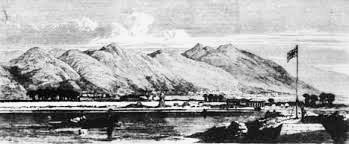
In the Meiji period, the renowned botanist Tomitaro Makino chronicled his astonishment upon viewing Mount Rokko from the waters of the Seto Inland Sea in his writings:
“I was startled to see the barren peaks of Mount Rokko from the waters of the Seto Inland Sea. At first, I thought it was covered in snow.”
Though unimaginable from its appearance today, the Rokko Mountain Range of the past had become so ruthlessly denuded that its exposed granitic bedrock could be mistaken for snow from a distance. Mount Maya was also swallowed by this regional wave of devastation; with the exception of the area around the summit, which lay within the sacred precincts of Tenjo-ji Temple, its mountain slopes were temporarily left severely scarred.
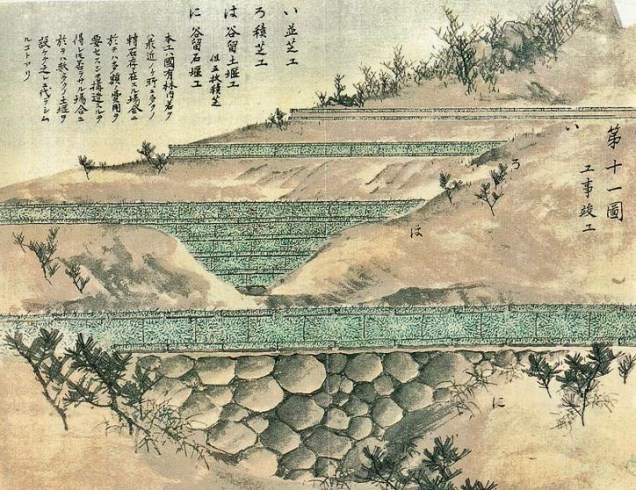
A turning point for this critical situation arrived during the mid-Meiji period. Spurred by a catastrophic flood in 1895 (the 28th year of the Meiji era), full-scale disaster prevention engineering was implemented. Slope reinforcement works aimed at revegetation began upstream along the Sakase River on the eastern side of the Rokko Range, accompanied by the construction of sabo dams (erosion control dams). Following another severe flood that struck Kobe the consecutive year in 1896, Hyogo Prefecture launched a comprehensive, full-scale project in 1901 (the 34th year of the Meiji era) for the greening and disaster mitigation of the entire Rokko Mountain Range.
The lush, verdant form of Mount Maya that we witness today is by no means an untouched, primeval forest. It is a crystallization of natural and human history—a landscape turned barren by human activities from the medieval to the early modern eras, and miraculously restored through the painstaking, blood-sweating efforts of people in the Meiji period and beyond in controlling water and planting trees.
Precisely for this reason, recognizing the history of past devotion hidden within the mountain’s current abundance will undoubtedly deepen the cultural allure that Mount Maya holds.

